Being a caregiver to an older parent is challenging at the best of times. For many seniors, they can live on their own for a long time, but at some point, they will require additional support or aging parent assistance . The most important thing is to know when this particular treatment or help is required for your parents. Below are 10 signs your elderly parent needs help that can help you to know the perfect time. Take care of small things or signals from your parents because these signals, or we can say symptoms, can be ignored easily. Early attention can have a significant impact on helping parents stay safe, comfortable, and supported . Here are 10 indicators that it could be time to take a step to provide extra care for seniors.
What Are the Signs an Elderly Parent Needs Help?
Aging parents often show physical, emotional, and behavioral changes when they begin needing extra support. Common signs include memory loss, missed medications, poor hygiene, difficulty walking, mood changes, and trouble handling daily tasks. Recognizing these early warning signs can help families provide better care and support before problems become serious.
10 Signs Your Elderly Parent Needs Help
They’re Not Taking Care of Themselves Like Before
When your parents’ presentation isn’t up to scratch, even if they used to be proud of their appearance and now seem sloppy in their clothing, avoiding regular bathing, or in grooming, this is worth attention. There may be a number of reasons for this change, such as physical discomfort, memory problems or perhaps senior safety concerns, such as depression.
Eating Habits Have Changed
The next time you visit their kitchen, take a look. Empty fridge? Do you have anything that is past its expiration date? If they have lost weight suddenly, or they do not have the proper meals, then this could indicate that they are struggling to cook, shop or remember to eat a meal regularly.
Medications Are Becoming Confusing
Concurrently taking multiple prescriptions can be confusing. Missed medications are also an alarming sign . When parents miss or take the wrong pill or when pills are building up in their medication cupboard, they definitely need help. Managing medications without support can become risky for seniors.
Memory Loss Signs
It’s okay to forget things once in a while, but if that’s a regular occurrence, then there’s a problem. When your parent is getting lost in familiar environments, repeating questions or not recalling information, it can indicate a need for attention regarding senior health decline.
Moving Around Is Getting Harder
They may be seen holding onto furniture while walking or not climbing stairs at all. Any kind of mobility and balance problems, no matter how minor, can contribute to the risk of falling, a top priority for older adults. You can see bruises or small injuries that are signs you might not have been aware of an accident.
Their Mood Has Shifted
In many families, these emotional changes can also increase caregiver stress and lead to caregiver burnout recovery challenges over time. Isolation is a common problem among elderly people, particularly when they live alone.
The House Isn’t as Tidy as It Used to Be
Their hygiene is declining overall. The house which is not clean, clothes that are not washed, dishes that are kept dirty in the sink for days or personal poor hygiene like unclean hair or dirty clothes are also signs that can tell you that now your parents are unable to do their own tasks.
Daily Tasks Are Becoming Difficult
Over time, stuff that is quite simple, like getting dressed up, cooking something to eat, or even going to use the restroom, feels very difficult and tough for our elders. If you see that your father or mother is going through this issue, then it is the perfect time for you to step up.
They’re Relying More on Others
While older adults frequently rely on neighbors, friends or you for certain chores, it’s not uncommon for them to need more elderly care assistance than usual over the years, and their independence could be waning.
Safety Is Becoming a Concern
Everyone prioritizes their safety first. One of the most important elderly parent care signs is that they are not taking their safety seriously. For example, leaving the gas on or the doors unlocked at night is a dangerous threat to the safety of your parents
What Should You Do Next?
These are signs to be aware of and not everything needs to be done at once. Begin with a simple discussion. Select a quiet time, and be truthful but gentle. From there, you can brainstorm with each other. A part-time caregiver is hired for some families to assist them with their activities and help with their daily living difficulties.
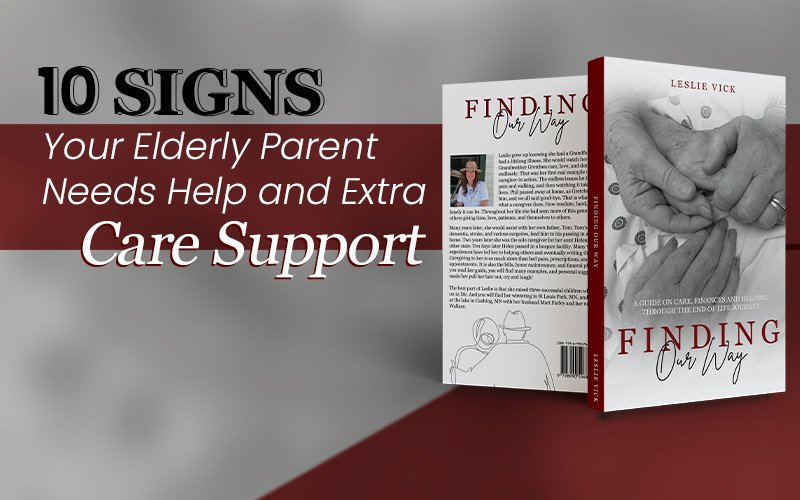
Ready to learn more regarding senior care warning signs? Discover Finding Our Way at Leslie Vick Books today.
Final Thoughts
In the end, it’s an emotional moment when you realize that your parents need help. This can seem a profound change, and not just for you, but for your partner as well. But offering elderly support needs when noticing these 10 signs your elderly parent needs help doesn’t mean taking away their independence. This involves taking steps to ensure a safe, dignified life can be maintained.
Frequently Asked Questions
1. Are these signs credible enough to be considered?
Yes, these signs are tested by many people and are valid.
2. What is the first step I should take if I find any of these signs in my parents?
First of all, you should talk to them regarding everything that is making them behave like this and then consult a medical professional.
3. Is there any chance of giving caregiving to my parents if I don’t have enough time?
Yes, there is family caregiving support that can help your parents nicely.
4. How can I talk to them without hurting them emotionally?
Choose kind words and make them feel that you care for them.